



By ECRI
An emergency stockpile helps organizations continue operations when normal equipment inventories or supplies become depleted or when supply chains are disrupted. The importance of such stockpiles became all too evident during the COVID-19 pandemic. One particular challenge – obtaining respiratory assistance technologies, like ventilators – remains fresh in many people’s minds. To help organizations plan for future crises, ECRI has tested and rated several ventilator models that might be stockpiled for use in a pandemic or other emergency. Key observations from the nonprofit organization’s recent evaluation are presented below.
“If you’re stockpiling ventilators that won’t meet patients’ needs in a crisis, then you’re not really stockpiling ventilators.” That’s the blunt assessment of Brad Bonnette, senior project engineer in ECRI’s Device Evaluation group.
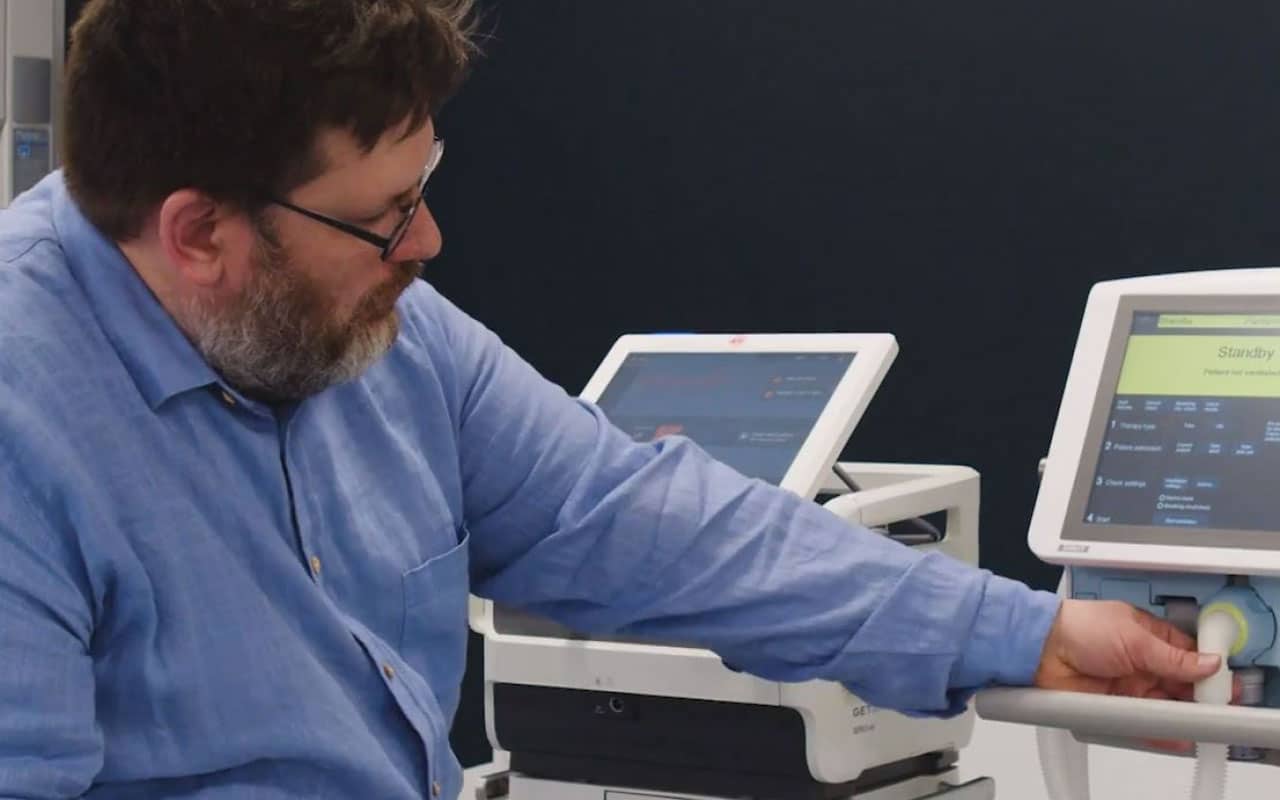
Bonnette led ECRI’s 2023 evaluation of transport ventilators, devices that are sometimes stockpiled for use in a pandemic or other emergency that may result in many patients requiring respiratory assistance. ECRI’s research revealed that many of the ventilator models that are designed specifically for pandemic/stockpiling applications would be virtually useless if they were ever called into service. The devices simply don’t have all the features needed to provide adequate ventilatory support.
“There seems to be this perception that you don’t need sophisticated ventilators in the stockpile,” notes Bonnette. “Just buy a bunch of cheap ones,” the thinking goes. One thing that COVID showed us, though, is that “patients will need real help during a crisis, so you need a real ventilator – one that provides the required functionality.”
Full-featured transport ventilators can be a good choice for this application. Basic, bare-bones devices, on the other hand, may prove to be a waste of money and space. ECRI’s September 2023 Evaluation of transport ventilators identified some of the key features to look for when assessing ventilator models for pandemic readiness applications.
Minimum Capabilities
Transport ventilators are designed to provide breathing support for patients while they are being transported within different areas of the hospital or from one hospital to another. Defining characteristics of such models are that they operate on battery power, they do not require an external source of compressed air for basic operation, and they are portable – that is, they can be easily carried or moved with the patient. These models are less sophisticated (and less expensive) than intensive care ventilators. Even so, many modern transport models offer advanced features that can make them appropriate for the ICU, typically as a backup option, or for other applications such as long-term care or home use.
The combination of sufficiently broad capabilities, low cost and portability (small size, battery-powered operation) make transport ventilators an attractive option for ventilator stockpiles. Buyers need to beware, however, that not all non-ICU ventilators are the same. Some basic ventilators have been developed specifically for stockpiling for pandemic use; and many of these models are much less sophisticated than a typical modern transport ventilator. In fact, many of them lack some features that most users would find essential.
ECRI recommends that organizations that are purchasing ventilators for stockpiling consider only devices that have the following features:
- Patient-disconnect and high-pressure alarms
- Volume breaths, pressure breaths and pressure support
- A blender with the ability to deliver gas from 21% to 100% oxygen when a high-pressure source is available
- Tidal volumes as low as 50 mL to support small pediatric patients
- Adjustable volume alarms (either tidal or minute volume)
- Peak flow between 10 and 80 L/min
Ventilator models that lacked these features were not useful in treating COVID-19 patients, and are very unlikely to be useful in future respiratory pandemics.
ECRI’s bottom line? Even though bare-bones devices can be much less expensive than more sophisticated models, money is better spent on obtaining ventilators that can be used to treat the types of respiratory complications that are most likely in a pandemic or other surge scenario, even if that means having fewer devices in the stockpile.
Additional Considerations
In addition to including the features required for providing the anticipated level of ventilatory support, ventilators that are to be pressed into service during an emergency must be ready for use when the crisis strikes. That is, models that are intended for pandemic readiness applications should be well suited to long-term storage in a stockpile. “There are practical realities that must be considered and accounted for,” explains Bonnette. “Batteries will deplete over time or may swell or otherwise become damaged in storage. Breathing circuits or other required accessories may be separated from the unit and hard to locate when needed. Consumable products may reach their expiration date.”
To account for such factors, ECRI includes the following criteria in its testing of ventilators for this purpose:
- Batteries should be easy to replace as necessary while the unit is configured for storage.
- The container should have an external label listing environmental storage requirements.
- The container should not be excessively large and should allow multiple devices to be stored together without a lot of wasted space.
- The manufacturer should offer maintenance training and provide the service manual to trained personnel.
- Any required accessories and consumables should be stored with the ventilator, rather than in a separate container.
- The consumables packaging should have an external label listing the expiration date.
Similarly, devices that are intended to be placed into service during an emergency should be easy to use, since the clinicians who will need to use them may not have experience with that model. ECRI’s criteria specifies that ventilator operation should be self-evident to a user qualified to operate the device so that, in an emergency, it can be operated with minimal delay and risk of error.
ECRI’s Testing
In September 2023, ECRI tested and rated five transport ventilator models for pandemic readiness applications. All the models tested meet ECRI’s minimum requirements for this purpose and performed well in our performance, safety, workflow, interoperability and cybersecurity testing. Key differentiating factors centered on maintenance and ease-of-use issues.
ECRI did not test any basic models that lack the capabilities outlined above. Based on features alone, such models would be rated unacceptable for stockpiling applications.
To Learn More . . .
This article is adapted from ECRI’s “Evaluation Background: Transport Ventilators, Evaluated for Pandemic Readiness Use” (Device Evaluation 2023 Sep 29). Members of ECRI’s Capital Guide, Device Evaluation, and associated programs can access the complete article, along with ECRI’s evaluations of—and product ratings for—related technologies. To learn more about membership, visit https://www.ecri.org/solutions/device-evaluations, or contact ECRI by telephone at (610) 825-6000, ext. 5891, or by e-mail at clientservices@ecri.org.
