



By K. Richard Douglas
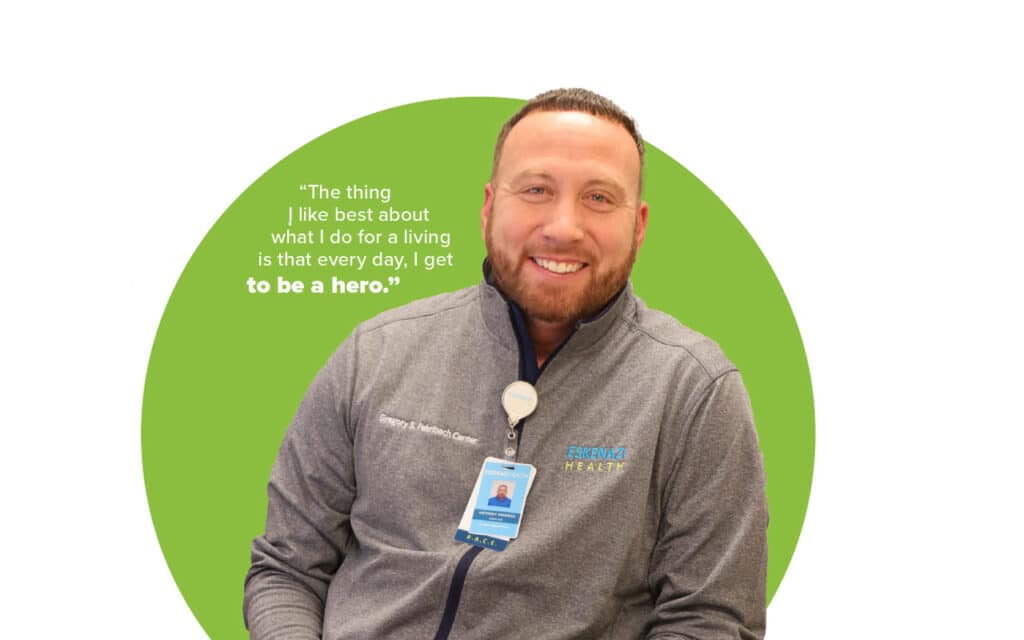
Anthony Phoenix is the director of biomedical engineering at Eskenazi Health in Indianapolis, Indiana. Phoenix had his interest in biomed piqued while pursuing a business major in college and changed his plans.
“As a college student studying business management, I was introduced to the biomedical engineering profession at a career fair held on campus. I thought that the work was interesting because I liked working with my hands and taking things apart to see how they work. I shadowed a biomed technician for the day at the local downtown hospital, then decided to switch my major,” he says.
Phoenix says that he started taking HTM courses with the idea to graduate and work as an in-house biomed technician.
“I attended school at Purdue University’s downtown Indianapolis campus, IUPUI, and graduated from the HTM program in 2002. I then went on to finish my B.S. degree in EET in 2006,” he says.
Since finishing training, Phoenix has come up the professional ladder, starting out as an entry level biomed technician (BMET I) in 2002, and promoted to BMET II and BMET III through 2006.
“I left the hospital setting in 2008 to work for Eli Lilly, a pharmaceutical company as an analytical instrument technician working on mass spectrometry, gas chromatography and HPLC (High Performance Liquid Chromatography) equipment. I returned to the hospital setting as an in-house radiology engineer in 2010. In 2021, I was promoted to the clinical engineer manager position, and most recently in 2021, was promoted to the director of biomedical engineering position,” Phoenix says.
The different roles that Phoenix has held have added to his areas of specialization.
“As an experienced biomed, I focused on OR equipment including anesthesia machines. As a radiology engineer, I specialized in MRI and nuclear medicine equipment, but also worked on CT, mammography and general X-ray equipment. As a manager, I was responsible for the day-to-day operations of the department as well as team performance metrics and regulatory accreditation reports. In my current role as director, I am primarily responsible for both the operational department and replacement capital equipment budgets,” he says.
Director Decisions
Moving up the HTM professional ladder does come with some challenges.
“Throughout the years I have encountered many challenges. The biggest special challenge that comes to mind is the response to COVID. During that time, the biomed department was faced with the challenge of working onsite, responding to service calls, maintaining equipment PM completion as well as facilitating the extremely high demand of respiratory equipment,” Phoenix says.
He says that the department added over 700 pieces of equipment to its inventory during the COVID response and converted over 140 acuity adaptable rooms to critical care rooms by adding critical care patient monitors and central monitoring throughout the acuity adaptable space.
“Another challenge that I have encountered is related to medical equipment cybersecurity. We could see the demand for this skill set continue to grow as we continue to integrate our medical equipment with other network systems in the hospital. We created a new position, manager of clinical systems and medical equipment cyber security, on the biomed team to specifically address this challenge,” Phoenix says.
He explains that this position is responsible for potential incidents by an identifying risk score associated with medical equipment, then mitigating that risk by taking targeted actions on the medical equipment.
“As the director of the biomedical engineering department, I find myself being more involved in many projects. With the continued technology advancements, the medical equipment that the biomed team is responsible for maintaining is now integrated and connected to other systems which creates special circumstances for the HTM professional to troubleshoot. These projects associated with medical equipment integrations continue to be at the forefront of my responsibilities,” Phoenix says.
He says that capital equipment replacement planning is also a continued project that he facilitates.
“Because Eskenazi was built in 2013, and all of the medical equipment was new at that time, all of the medical equipment is aging at the same rate. Part of my responsibilities, as related to capital equipment replacement planning, is to develop a five-year capital plan to know what fleets of equipment we should replace early, what equipment we should replace on time and what equipment we can safety push out a year or two and replace a little later,” Phoenix says.
Phoenix says that choosing biomed as a college student was the best decision he could have made. He reflects on the field as many HTM professionals view it.
“I value all of my experiences as a BMET and radiology engineer, getting to work on fascinating medical equipment. The thing I like best about what I do for a living is that every day, I get to be a hero. When I show up, there is usually a patient and/or a caregiver that is having a negative experience with their equipment. I love being able to fix the problem and making their day better. I appreciate their sincere gratitude when the problem is resolved and they can now move forward with providing their patient with the best care possible,” he says.
When not managing a biomed department, Phoenix enjoys boating, camping, riding ATVs and watching his sons’ youth sports games (football, basketball, baseball).
He has been married for 16 years and has two boys; 16 and 13 years old.
While a business major may lead to a worthwhile career, the decision to pursue HTM can present many opportunities. This biomed director has embraced his experience to evolve his career to the benefit of others.
