



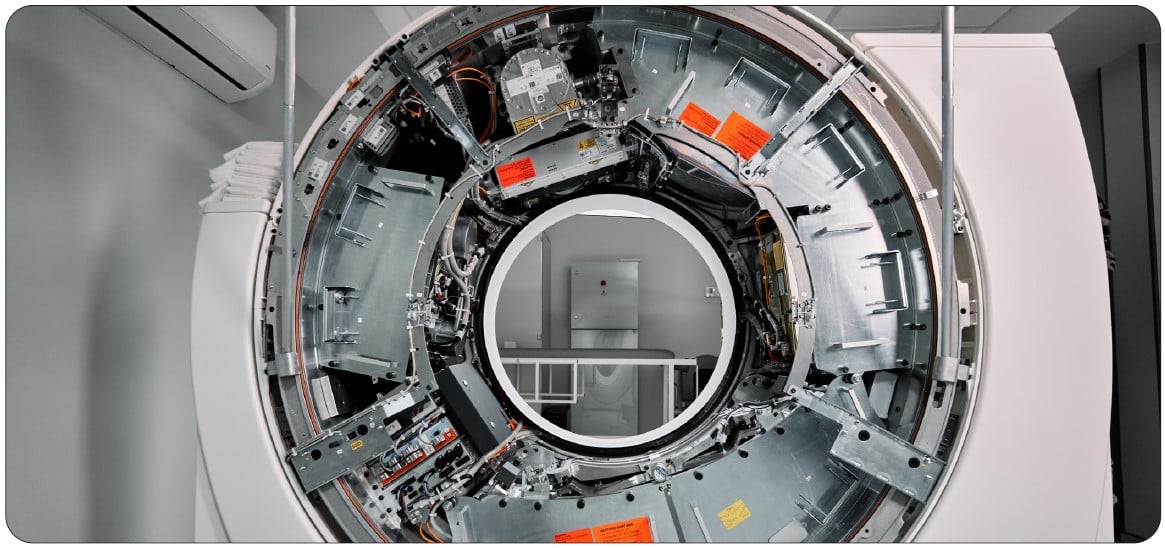
When it comes to servicing medical devices, healthcare providers often must choose between Original Equipment Manufacturer (OEM) service options and independent third-party service organizations. Each approach offers distinct advantages and challenges, from cost and flexibility to regulatory compliance and parts availability. In this roundtable discussion, industry experts share their insights on the key differences between these service models, addressing common misconceptions and exploring how third-party providers ensure quality and reliability comparable to OEMs. Through this Q&A, TechNation aims to provide a comprehensive look at the evolving landscape of medical device servicing and the factors influencing provider decisions.

Participants in the roundtable article are:
- MW Imaging Business Development Executive Jessica Curtiss
- Innovatus Imaging Director of Commercial Operations Ted Lucidi, CBET
- Renew Biomedical Assistant Biomed Manager JL Morgan, CBET
- Soma Tech Intl Director of Operations Pramod Narkhede
- Renovo Solutions Director of HTM & QA Ernie Oates
NOTE: GE HealthCare and Siemens Healthineers were invited to participate but did not submit answers.
Q: What do you believe are the primary differences between services provided by OEMs and independent third-party service organizations?
Curtiss: The primary difference between OEM and independent third-party service organizations like MW Imaging is that independent third-party providers typically offer a broader range of expertise, servicing multiple brands and product types. This diversity enables them to be more adaptable and knowledgeable about a wider array of equipment, compared to OEM service organizations, which often focus on a single brand or product line.
Lucidi: A few items that OEMs provide and areas in which they excel are consistency, quality, and accountability. Unfortunately, those provisions translate into very high costs, lack of flexibility, and limited-service options. The entire independent service industry exists due to gaps created by the constraints of, and costs associated with, utilizing OEMs. If performed correctly, ISOs can provide services on-par with an OEM. In many instances, ISOs may provide services, greatly enhanced or in compliment, to that of an OEM. The divisions at Innovatus Imaging fill gaps that do not exist in the OEM realm. OEMs do not provide a repair service for ultrasound probes or MRI coils. Healthcare organizations are limited to a replacement model from most OEMs. What if, you as a consumer, had to replace your vehicle with the OEM dealer for a minor service issue?
Morgan: OEMs often have longer turnaround times for repairs and can only service their equipment. In contrast, third-party service organizations offer faster response times and support a wide range of equipment from multiple OEMs. This flexibility simplifies maintenance and streamlines service management for end users, reducing downtime and providing a more efficient, cost-effective solution.
Narkhede: Both OEMs and independent third-party service providers share the same goal – ensuring that medical equipment is repaired and fully operational as quickly and efficiently as possible. However, hospitals, surgical centers, and other medical facilities are not only looking for speed and efficiency; they also need cost-effective solutions. This is where third-party service providers offer an advantage. By focusing on troubleshooting and repairing at the component level whenever possible, third-party providers help reduce repair costs while also minimizing downtime. OEM service options often involve replacing entire modules or assemblies, which can lead to higher expenses. A third-party approach not only helps control costs but also ensures that critical equipment is back in service as soon as possible.
Oates: The primary reasons many healthcare delivery organizations choose services provided by an ISO over an OEM are cost-effectiveness, customized service offerings tailored to a facility’s unique needs, and greater flexibility in sourcing repair parts. ISOs can procure parts from multiple sources – OEM-direct, OEM-equivalent, or refurbished – allowing for cost savings without sacrificing quality. This flexibility, combined with a service model that prioritizes responsiveness and adaptability, enables ISOs to better align with the operational and financial goals of healthcare delivery organizations.
Q: How do independent third-party service organizations ensure the same level of quality and reliability as OEM services?
Curtiss: To ensure your supplier is adhering to standards, its crucial to verify their company has obtained an ISO 13485:2016 certification. MW Imaging has had this certification for a number of years and maintains a quality failure rate of less than 2% on parts and service. Third-party service organizations often comply with industry standards and regulations, ensuring their practices meet or exceed the benchmarks set by OEMs. This includes adhering to best practices for installation, repairs, and maintenance, while also ensuring compliance with safety and operational standards. As a result, these organizations can provide high-quality service while offering flexibility across a variety of brands and equipment types.
Lucidi: Any independent service organization that claims to ensure, meet, or exceed OEM specifications, performance standards, and/or quality is telling an outright lie. No one, but the OEM, knows the standards to which they are benchmarked, nor do OEMs release detailed specifications for their devices. Innovatus engineers are able to measure all sorts of parameters with some very sophisticated test equipment. The measurements are used to help define OEM-intended design and develop internal specifications. We can then compare the outputs of our processes to those measured and define acceptance criteria. In addition, Innovatus utilizes personnel, processes, and standards employed in our FDA-registered design and manufacturing facility to inform and help define our repair processes. To ensure clients that Innovatus is committed to continuous quality improvement and operate similarly to an OEM, we utilize a very robust ISO-13485:2016 certified quality management system.
Morgan: The standard for ReNew Biomedical is for our technicians to follow OEM service manuals to ensure repairs meet OEM standards. ReNew technicians also use calibrated test equipment and follow the same testing procedures and documentation as released by the OEM to test to the same standards. Additionally, many OEMs provide service training for third-party providers, equipping them with the necessary knowledge and skills to maintain and repair equipment at the same level of quality as the OEM.
Narkhede: Independent third-party service providers follow the same performance inspection protocols outlined in OEM service manuals to ensure equipment meets manufacturer standards. Many technicians and engineers also receive training directly from OEM programs, equipping them with the same technical knowledge and expertise. Additionally, third-party providers often go beyond OEM processes by implementing cost-effective repairs at the component level while maintaining strict quality control measures.
Oates: Independent third-party organizations can ensure the same level of quality and reliability by adhering to internationally recognized quality standards such as ISO 9001 and ISO 13485. Additionally, ISOs integrate key performance indicators into service agreements, often matching or exceeding OEM benchmarks, and will include financial penalties if KPIs are not met. Common KPIs include response times, first-time fix rates, and uptime percentages, which are continuously monitored to improve service delivery.
Q: What advantages do third-party service organizations have over OEM services in terms of cost-effectiveness and flexibility?
Curtiss: Third-party service organizations typically offer more affordable rates than the OEM. This is comprised of lower labor costs, competitive pricing, and the use of cost-effective replacement parts. Additionally, they provide increased savings by offering flexible, customized support with quicker response times. Our ability to service multiple brands, work outside of warranty terms, offer remote support, and operate with fewer bureaucratic restrictions gives us an unmatched level of flexibility and coverage.
Lucidi: Typically, ISOs are much more flexible and cost-effective than OEMs due to their smaller size and specialized focus. OEMs have massive overhead to absorb, which affects their ability to compete cost-effectively, against most ISOs. The pure size, regulatory requirements, and operational constraints force OEMs to operate with much less flexibility. ISOs have been, and are still currently, permitted the freedom to define the manners in which they provide service. An OEM may be limited to replacing a large and expensive FRU (Field Replaceable Unit), while and ISO may be able to source select components within the FRU and provide an equivalent, but more cost effective, solution.
Morgan: Third-party organizations can significantly reduce service costs by using aftermarket and refurbished parts. In contrast, OEMs are limited to using only their own manufactured parts, often leading to higher expenses. The usage of refurbished parts allows third-party providers to deliver service beyond the point when an OEM declares a device is end-of-life.
Narkhede: Third-party service providers offer significant cost savings through lower labor rates and a more repair-focused approach. Instead of automatically replacing entire modules or boards, they troubleshoot and repair at the component level whenever possible, reducing parts costs. Additionally, third-party providers offer greater flexibility with service contracts, response times, and multi-vendor support, ensuring healthcare facilities receive tailored solutions that fit their needs and budgets.
Oates: ISOs provide significant advantages in cost-effectiveness and flexibility. Third-party service organizations can maintain and repair equipment from multiple manufacturers, enabling HDOs to make cost-driven purchasing decisions rather than being locked into a single vendor. By leveraging multi-vendor servicing, strategic part sourcing, and tailored maintenance plans, ISOs help facilities extend useful life of equipment and reduce total cost of ownership while maintaining high-quality patient care.
Q: Are there any regulatory or compliance challenges that independent third-party organizations face compared to OEMs when servicing medical devices?
Curtiss: OEMs have dedicated departments and legal counsel to ensure they stay up-to-date with regulatory requirements and compliance. In contrast, third-party service organizations focus on maintaining certifications (e.g., ISO 13485:2016), ensuring proper documentation, and fostering strong supplier relationships to ensure our parts meet or exceed OEM specifications while meeting safety and compliance standards.
Lucidi: Currently, ISOs are much less, if not minimally, constrained when compared to OEMs with respect to regulatory requirements and compliance. It can be quite alarming to realize that, from a regulatory perspective, anyone can service any medical device, using any component or any process they deem appropriate. One item that is noteworthy, and rather refreshing, is the increasing number of independent organizations seeking to become ISO-13485:2016 certified. Organizations operating within an ISO-certified QMS, based on the specific scope of that certification, have the potential to function similarly to OEM organizations with respect to monitoring, risk assessment, accountability, and continuous quality improvement.
Morgan: Since the FDA does not currently regulate servicing activities, ReNew has achieved and sustained ISO 13485 certification to ensure compliance with industry-best practices. This standard focuses on quality management for medical devices, emphasizing regulatory requirements, risk management, and consistent service quality, helping third-party organizations maintain high standards and reliability in their operations. Beginning in 2026, the FDA is also aligning their Quality Management System Regulation with the ISO 13485 standard, so the expectations of ISO 13485 certification will mirror the expectations that the FDA places on OEMs for the maintenance, repair, and servicing of their own devices. It’s important for device users to research their service providers, and they should expect that proficient service providers will also maintain ISO 13485 certification.
Narkhede: One of the main challenges independent third-party service providers face is ensuring that repairs are performed by fully trained and certified technicians for each specific product. To address this, reputable third-party providers invest in ongoing training and certification programs to maintain high service standards. Another challenge is the availability of spare parts, but larger third-party organizations mitigate this by maintaining extensive parts inventories, ensuring quick turnaround times and minimizing equipment downtime.
Oates: As long as an ISO operates within the boundaries of servicing – without crossing into remanufacturing, as outlined in the FDA’s Remanufacturing of Medical Devices guidance document – there are no additional regulatory or compliance challenges. One common hurdle ISOs may encounter is restricted access to proprietary parts. However, by fostering strong partnerships with OEMs, healthcare delivery organizations and utilizing alternative sourcing strategies – such as leveraging secondary markets or refurbished components – these challenges can be effectively managed while maintaining both compliance and patient safety.
Q: What impact do parts availability and sourcing have on third-party service offerings versus OEM services?
Curtiss: While third-party service organizations benefit from greater flexibility in sourcing parts, they may face challenges in accessing high-quality or OEM-approved components. However, third-party service organizations often provide more cost-effective services by refurbishing replacement parts. In contrast, OEM services have direct access to genuine parts, but typically come at a higher cost with longer lead times.
Lucidi: OEMs are limited to providing parts and services as specified in their quality management system. Their service reps must follow very well-documented procedures and must capture changes to each device serviced. All parts and components undergo very well-defined verification and validation procedures before being released to inventory or the field. Currently, ISOs are not encumbered by these, and other, requirements. ISOs, currently, also have the freedom to source replacement parts from anyone/anywhere following no documented process and do not have to subscribe to any standard of quality. Independent providers, operating within an ISO-13485:2016 certified QMS, are the exception. Innovatus only procures components, materials, replacement products, etc. from a list of qualified suppliers. Our suppliers are routinely evaluated and there are well-defined processes to qualify both, the suppliers and items they provide.
Morgan: In most cases, ReNew seeks to purchase parts directly from the OEM. Alternatively, a third-party service organization can source aftermarket or refurbished parts to prevent delays in repairs or service. This flexibility allows for faster turnaround times, ensuring equipment remains operational without waiting for OEM-supplied components, which may have longer lead times. ReNew maintains the responsibility for ensuring that any third-party or refurbished parts do not impact the performance of the device.
Narkhede: Parts availability plays a crucial role in service efficiency, but established third-party providers mitigate this challenge by maintaining a robust inventory of spare parts and accessories. Unlike OEMs, who may have longer lead times or restricted parts access, third-party service organizations leverage multiple sourcing channels to ensure quicker repairs and minimize equipment downtime for healthcare facilities.
Oates: Parts availability is a key advantage of ISOs over OEMs. While OEMs typically require original, brand-specific parts (often at premium prices) ISOs have access to a wider supplier network, including OEM-direct, third-party, and refurbished parts. This flexibility allows ISOs to reduce maintenance costs without compromising quality. While patient safety and supplier quality remain at the forefront of decision-making, the ability to source from multiple suppliers gives ISOs a distinct advantage in ensuring timely repairs and cost-effective maintenance. Particularly when looking to control expenses, access to high-quality refurbished parts allows ISOs to offer cost savings that may not be an option for OEM service models.
Q: Are there any misconceptions that you believe need to be addressed about the value of third-party service organizations compared to OEM service providers?
Curtiss: A common misconception is that OEM services are always superior; however, third-party services often offer comparable – if not better – quality, cost-effective solutions, and flexibility, while still meeting regulatory standards. The choice between third-party and OEM services should be based on specific factors such as service needs, budget, and response time, rather than assuming third-party providers are lower in quality or reliability. It is important to validate your suppliers’ certifications, and make sure you are provided with an up-to-date copy of their ISO certification.
Lucidi: Independent service organizations play a vital role in supporting healthcare technology management. As in any industry, there is a small segment whose activities cast a shadow on the industry as a whole. Innovatus recommends that HTM departments develop a supplier, or vendor, scorecard, similar to vendor qualifications in the ISO-13485 quality standard. Although price is always a concern, it should never be the key driver in any decision. Metrics such as warranty period, valid warranty rate, response time, repair-vs-replacement rate, and the ability to restore product life cycle all contribute to the overall long-term cost. If the independent service organizations chosen by your HTM department operates within the ISO-13485:2016 QMS standard and limit their activities to their certified scope, you should feel a strong level of confidence when choosing it over the OEM.
Morgan: Many assume OEMs provide better service than third-party service organizations, but third-party organizations like ReNew employ highly trained experts, sometimes former OEM technicians. Another misconception is that third-party organizations use inferior parts, yet many offer high-quality, certified, or even OEM components. Third-party organizations can also provide faster response times, flexible scheduling, and vendor-agnostic expertise. While cost savings are a benefit, ReNew offers more than just affordability – it delivers customized solutions, extended support for legacy equipment, and, in some cases, more flexible service options than OEMs.
Narkhede: A common misconception is that third-party service providers do not follow OEM service protocols or lack proper training. In reality, reputable third-party organizations employ technicians and engineers who are either OEM-trained or have undergone specialized training on the products they service. Additionally, third-party providers often take a more in-depth approach to repairs, focusing on component-level fixes rather than full module replacements, ultimately reducing costs while maintaining high-quality service.
Oates: A common misconception is that third-party service organizations provide lower quality service than OEMs. Many ISOs employ highly trained technicians, many of which come from OEMs, with expertise equivalent to or greater than OEM service personnel. ISOs like Renovo are equipped with the tools, training, and expertise that can be just as advanced as those of OEM service technicians.
