



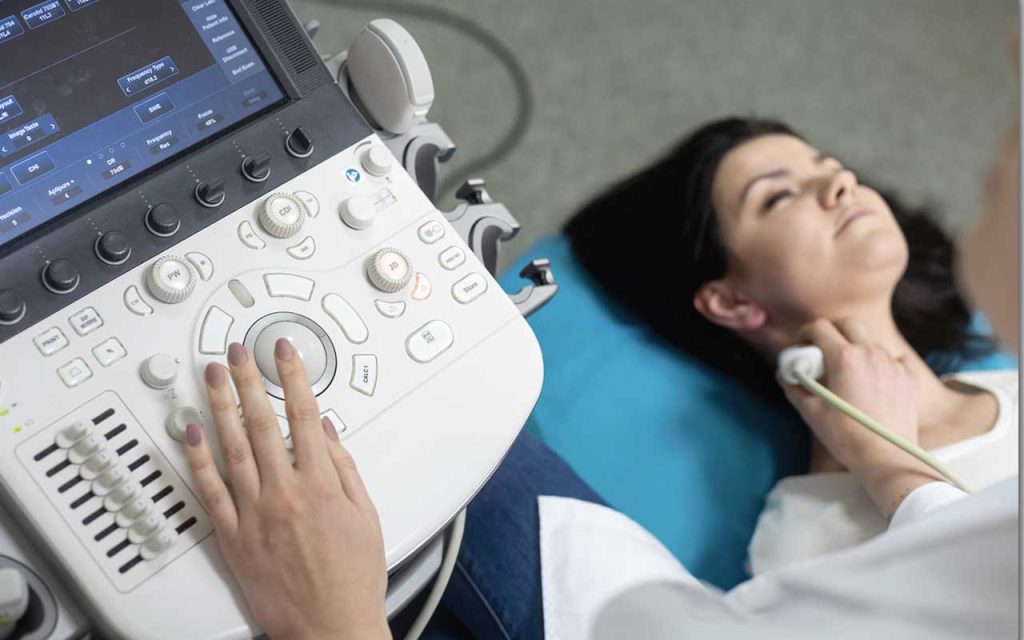
Ultrasound systems have been described as the new thermometer because they are often used in the early stages of a patient diagnosis. These important medical devices can be amazing tools for healthcare providers. They can also be a headache when they don’t perform as expected. TechNation recently invited some leading ultrasound service experts to share tips and insights with readers.
Participating in this Roundtable article on ultrasound systems are:
• AllParts Medical Multi-Vendor Ultrasound Modality Manager Joni Charles;
• Solutech Vice President of Sales and Marketing Scott Gassel;
• MW Imaging Corp. Field Service Engineer Ryan Pratt; and
• Innovatus Imaging Vice President Sales and Marketing Matt Tomory.
Q: WHAT ARE THE MOST COMMON ISSUES YOU ENCOUNTER WITH ULTRASOUND SYSTEMS?
CHARLES: The most common issues involve power supplies, monitors, and control panels – components prone to wear over time. Regular preventive maintenance and timely replacement are essential to minimize downtime and ensure reliable system performance.
GASSEL: Ultrasound transducer issues typically fall into two categories – cosmetic and operational failures, both of which can compromise image quality, patient safety, and diagnostic accuracy. Operational problems like image artifacts or static interference often result from cosmetic damage, such as a cracked acoustic lens, worn cord sheathing, or fluid intrusion. Severe cases of fluid ingress can damage internal electronics and render the transducer inoperable, posing serious risks to clinicians and patients. At Solutech, our advanced dehydration protocol has been proven to restore functionality in even severely compromised transducers, extending equipment life and supporting safe, high-quality patient care.
PRATT: Some of the common issues I see include faulty probe connectors, worn-out trackballs, touchscreens, power supply failures, and software crashes due to corrupted system files or failing hard drives. Overheating probes and image quality concerns are also frequent, especially on systems with aging transducers and without frequent system preventive maintenance.
TOMORY: Back when I started in the ultrasound industry in 1986, the systems were very hardware centric, and the probes were built like tanks, so the main problems were hardware failures of the system. Today, ultrasound systems have very little hardware and are very software driven so software issues are the most common. I strongly recommend backing up system hard drives so when, not if, the software gets corrupted, a backup may be restored. Speaking of backups, the system user files and presets MUST be backed up regularly so they may be restored when restoring the system software. Regarding the probes, they have become the highest frequency and cost associated with ultrasound support. Proper care and utilization of certified and reputable probe repair organization is vital to ensure safety, performance, and longevity.
Q: WHAT TOOLS OR SOFTWARE DO YOU RELY ON FOR CALIBRATION AND PERFORMANCE TESTING?
CHARLES: For calibration and performance assessments, we primarily utilize onboard diagnostics and system logs. These built-in tools allow for efficient troubleshooting and help ensure systems remain in compliance with performance standards without requiring extensive external equipment.
GASSEL: Unlike facilities that use only standard grayscale phantoms, we utilize advanced Doppler flow phantoms that simulate real fluid and blood flow, closely mimicking human physiology. This enables precise evaluation of Doppler and color imaging performance under realistic conditions. As a result, clinicians can trust their equipment to deliver accurate, high-quality images that support confident diagnoses.
PRATT: I rely on a core set of tools to assess and maintain ultrasound systems. A digital multimeter and safety analyzer are essential for checking power supply integrity and ensuring patient safety. I use an ultrasound phantom to evaluate image quality parameters like resolution and depth accuracy. An antistatic vacuum is also part of routine preventive maintenance to safely clean internal parts of the system to improve airflow without risking ESD damage. On the software side, I make use of the system’s built-in self-test features, which often provide the first clues when something is wrong.
TOMORY: Calibration? I used to use an oscilloscope to calibrate the receivers on the old GE RT3200 systems which only the seasoned readers of this article will remember. Today, the systems are software driven and self-calibrate so service calibration is rare and uses the system diagnostic software. For performance testing, a tissue mimicking phantom should be utilized by trained personnel for preventive maintenance and accreditation purposes. There is a component missing from this question: safety. An electrical safety tester is critical to test not only the safety of the system (enclosure) but can be used to evaluate the electrical safety of the probes themselves. There are expensive and cumbersome devices on the market that can do this, but a basic safety tester is all that is required.

Q: ARE REFURBISHED ULTRASOUND SYSTEMS A VIABLE OPTION FOR HEALTHCARE FACILITIES?
CHARLES: Yes, refurbished ultrasound systems can be a highly viable solution especially for facilities managing budget constraints. When sourced from reputable providers and maintained properly, refurbished units can deliver reliable performance and extend access to diagnostic imaging technologies.
GASSEL: Refurbished ultrasound systems can be a viable option for healthcare facilities when they are restored with the same rigor and attention to detail that Solutech provides. This approach not only extends the life of the equipment but also ensures that clinicians can trust these systems to build the road map for patient care with confidence and precision.
PRATT: Absolutely. When properly refurbished by experienced professionals and paired with a solid warranty, refurbished systems can provide excellent value and reliability. For facilities with budget constraints, it’s a smart option that doesn’t compromise diagnostic quality.
TOMORY: Absolutely. Like automobiles, ultrasound systems depreciate fast once put into service. Technology has somewhat plateaued with ultrasound systems and there are many high-end systems available in the used market today. The buyer is advised to ensure the system is still supported by the OEM in the event of software updates, has all the features they plan on needing as adding features is very expensive or even cost prohibitive and can be serviced by in-house teams if that is your service model. The probes should be from a source trusted to ensure and be able to supply data that verify they are OEM form, fit and function, are safe and effective and perform as the OEM intended.
Q: HOW DO NEW SOFTWARE FEATURES OR AI CAPABILITIES AFFECT MAINTENANCE OR TRAINING?
CHARLES: Advancements in software and the integration of AI capabilities have generally improved both maintenance and user training. These enhancements are typically embedded within the system architecture and do not add complexity to service routines. In fact, they often streamline processes and reduce the need for manual intervention.
GASSEL: Emerging AI capabilities and new software features are transforming ultrasound system maintenance and training by enabling predictive diagnostics and real-time performance insights. This evolution from reactive to preventive maintenance enhances system reliability and extends the lifespan of your equipment. At Solutech, we embrace these advancements through ongoing training programs that keep our teams and clients up to date, ensuring optimal performance and exceptional patient care.
PRATT: New software features and AI capabilities are significantly improving both maintenance and training. Onboard software tools, such as system tests, now provide clear pass/fail indicators to quickly confirm whether a system is functioning properly. Additionally, systems offer more descriptive error messages that help us identify and resolve issues more efficiently. Many platforms also include built-in transducer tests that can detect faulty probes. AI is enhancing clinical training by introducing features designed to reduce variability between users, speed up exam times, and deliver more consistent results. These advancements ultimately lead to more reliable system performance, increased uptime, and greater consistency in clinical use.
TOMORY: Software features and AI continue to evolve and enhance the imaging quality, improve workflows, and assist in diagnoses in some cases but are typically part of the system software or the backups you should be performing. As software becomes more integrated into the systems, the criticality of system and user defined files become much higher.
Q: WHAT CHANGES WOULD YOU LIKE TO SEE FROM MANUFACTURERS IN TERMS OF DESIGN OR SERVICEABILITY?
CHARLES: One improvement that would greatly benefit service teams is the standardization of built-in Pass/Fail diagnostic tools for preventive maintenance. Having a consistent, accessible diagnostic module on every unit would reduce ambiguity during inspections and accelerate troubleshooting across varied equipment models.
GASSEL: Manufacturers are constantly improving their designs to improve patient health. These technological improvements are driving breakthroughs in ultrasound care. As technology continues to evolve, we expect to see serviceability and durability improved, meeting the demands of real-world clinical environments.
PRATT: I would like to see more modular designs that allow quicker replacement of major components, standardized connectors across models, and open access diagnostics that don’t require proprietary dongles and passwords to access. Remote diagnostic tools should be more widely supported to cut back on system downtime.
TOMORY: The pendulum of OEMs opening access to system diagnostics continues to oscillate. I would like to see a fair and equitable solution where the OEMs furnish diagnostics and other proprietary software including software needed when replacement parts are installed to ensure healthcare providers can repair their own systems or designate a qualified repair provider. There is a training component, licensing, etc. but we all have the same goal: ensure safety and access to patients which is affordable to the provider and patient.
Q: WHAT ELSE WOULD YOU LIKE TO SHARE WITH TECHNATION READERS?
CHARLES: Ultrasound systems are becoming more portable, software-driven, and integrated into hospital networks. As a result, service professionals must adapt by combining hardware skills with IT and cybersecurity knowledge. Staying current and collaborating closely with clinical teams is key to ensuring optimal system performance and efficiency.
GASSEL: Solutech is your trusted partner in healthcare service, parts, and maintenance – delivering 360° solutions for your ultrasound equipment. We’re available 24/7/365, offering highly responsive, professional technical support to dramatically reduce downtime and maximize uptime – backed by an impressive repair yield and a 100% satisfaction rate. ISO 13485:2016 certified for quality and compliance, our systems ensure the highest standards in safety, reliability and performance.
PRATT: One of the most overlooked but critical aspects of ultrasound system care is maintaining an up-to-date backup of system settings. During preventive maintenance, I always ensure that a current backup is created or updated. This can save a lot of time and protect against data loss in the event of hardware failure or corruption. Beyond that, I’d like to emphasize the value of regular maintenance and good documentation to keep these high-demand systems running smoothly with minimal downtime.
TOMORY: When purchasing a system, it is critical to have access to diagnostics, service codes, etc. post warranty. You may or may not want to continue with the OEM after the warranty period but need to ensure you have options. Also, since probes are the most expensive aspect of ultrasound support, are the probes supported by a third party if you choose that option?
