



By K. Richard Douglas
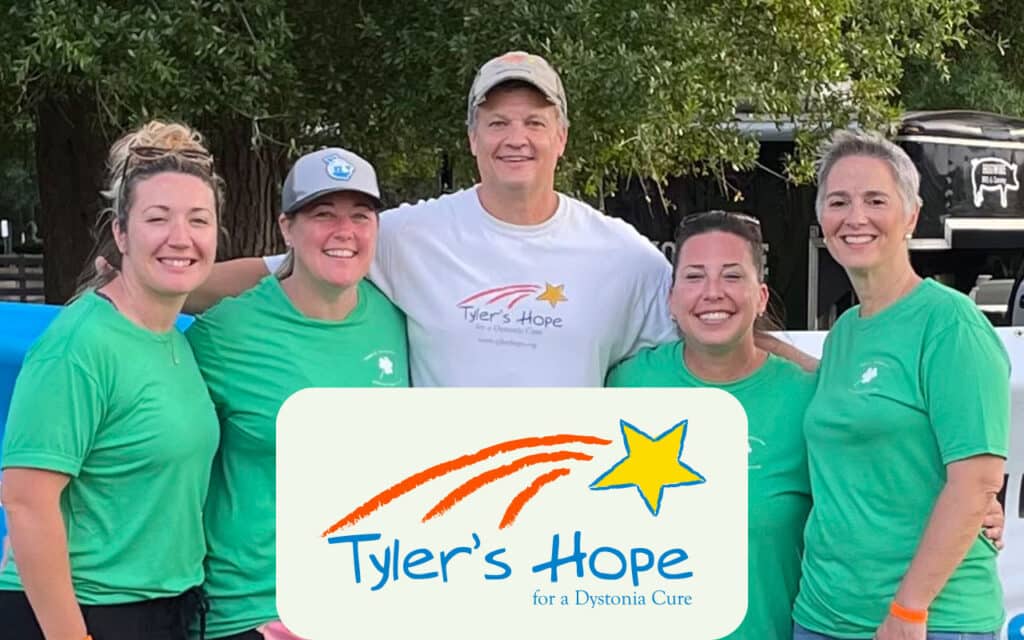
Seven-year-old Tyler was like so many boys his age; he loved sports and played several. While practicing basketball, his dad noticed that Tyler’s arm was shaking uncontrollably. That was in 2005 and Tyler’s parents took him to many specialists who all failed to make a diagnosis of this mysterious condition.
Eventually, while in the hospital, Tyler was examined by Dr. Michael Okun. Okun was able to diagnose Tyler with dystonia. Because Tyler had acquired dystonia at such a young age, the form of the condition was early-onset.
Dystonia is a condition characterized by involuntary muscle contractions, twisting of specific body parts such as an arm or a leg, rhythmic tremors and other uncontrolled movements. A gene mutation is most commonly the cause. There currently is no cure for the disorder. There are a half-million people affected with the disorder in North America.
Because the condition is linked to a gene mutation, that means that other siblings can also carry that same gene mutation. That turned out to be the case. Tyler’s sister, Samantha, was diagnosed with generalized dystonia and there is a chance that Tyler’s younger brother could eventually show some symptoms of the condition as well.
For most parents, getting a diagnosis and any available treatments would be the scope of their response. Tyler’s parents took their response a big step further.
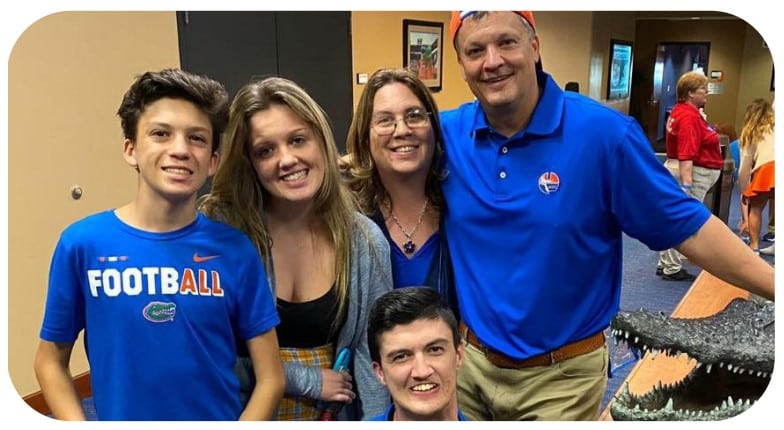
Rick Staab, CHTM, chief executive officer of The InterMed Group and his wife established the Tyler’s Hope Foundation, a 501(c)(3) organization, to advance research for a cure, discover effective treatments and to bring awareness and education of dystonia. The organization also supports the annual Tyler’s Hope Summit on Dystonia Research.
“Our journey began in 2005 when our oldest son, Tyler, was diagnosed with dystonia and received care at the University of Florida. We quickly realized that dystonia research received very little funding, despite the presence of a known gene mutation and protein associated with the condition,” Staab says.
He says that understanding the significance of targeted interventions, they took on the responsibility to raise substantial funds and accelerate the timeline for finding a cure, not only for their children but also for others affected by dystonia.
“The dedication of Dr. Michael Okun and Dr. Kelly Foote, who are my children’s neurologist and neurosurgeon, respectively, along with their patient-centric approach and commitment to translational research, has gained widespread recognition. Their motto, ‘The patient is the sun, and the health care team should orbit around the patient’s needs,’ has resonated throughout the medical community,” Staab says.
He says that they designated the University of Florida as their first Center of Excellence in recognition of the university’s groundbreaking research.
“As part of this designation, the center established a fellowship program, which we fund, resulting in one of the largest movement disorder fellowships in the country, if not the largest. These fellows have since moved on to other institutions, furthering their research and expanding the field,” Staab says.
He says that by closely monitoring dystonia research publications and proactively reaching out to researchers and institutions, they are able to establish connections and offer support and funding whenever possible.
“Our successful partnership with the University of Florida and the extraordinary return on investment in terms of scientific advancements and breakthroughs have cemented their status as a leading institution in dystonia research. While there may be competing funding priorities and various conditions requiring research, our passionate pursuit of a cure coupled with the exceptional work of talented scientists has garnered attention and support for dystonia research,” Staab adds.
The Hope Weekend
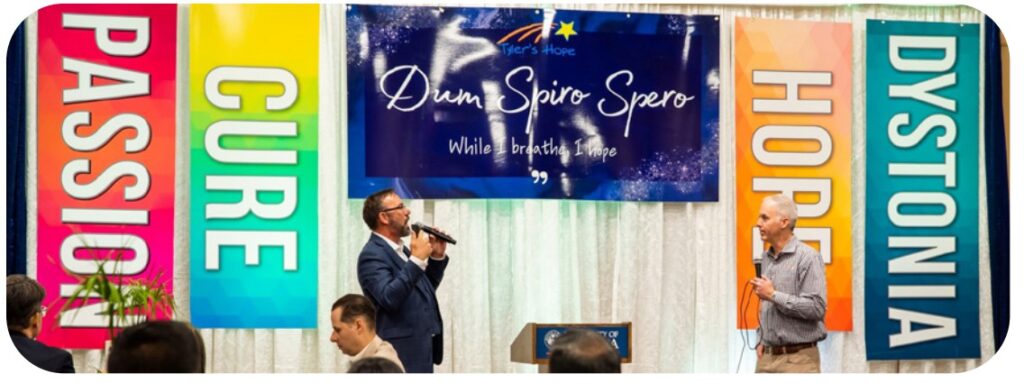
The efforts of the Staabs and the researchers and medical professionals becomes even more focused once a year with The Hope Weekend every October. The 2023 Hope Weekend is October 19-21.
“Preparation for The Hope Weekend involves the formation of a planning committee consisting of our executive director, board members and dedicated volunteers. The committee begins by creating a budget, securing event locations, confirming vendors, recruiting speakers and developing marketing materials. We also proactively approach companies to donate items for the auction, aiming to offer a diverse range of items and maximize funds raised for research,” Staab says.
He says that at the same time, they coordinate with entertainment providers, such as live music and bagpipers, and organize swag bags, awards and various marketing initiatives like PSAs, banners and radio/TV spots.
“Throughout the planning process, we strive to keep the mission of celebrating dystonia progress and raising funds for a cure at the forefront of everyone’s minds,” Staab says.
The Hope Weekend requires year-round planning and preparation with planning for the next event starting just after the conclusion of the current one.
“We utilize the months of October and November to initiate preparations for the following year’s event. Given the scale of the undertaking, we require ample time to ensure its success. Tasks during this period include reserving space for appreciation dinners, setting golf tournament dates, sending Save the Date reminders to sponsors and potential participants. It’s essential to remind people early on about the upcoming Hope Weekend,” Staab says.
The Summit brings together important stakeholders within the dystonia research community.
“The Tyler’s Hope for a Dystonia Cure Summit on Dystonia Research is a collaborative effort between the Tyler’s Hope Foundation and the University of Florida Health, where our first Dystonia Center of Excellence is located. We primarily extend invitations to renowned researchers in the field of dystonia research and care, including Ph.D. students, new researchers and fellows with an interest in dystonia research. Additionally, we actively participate in neurological and disease-related conferences to stay informed about ongoing research efforts. We believe it is essential to incorporate diverse perspectives and ideas, even from those studying other diseases and disorders,” Staab says.
He says that originally inspired by the concept of the Manhattan Project, where top researchers were brought together to solve a problem, they organized the Dystonia Summit as a think tank.
“While we cannot physically confine participants like in the Manhattan Project, our aim is to gather the world’s leading scientists, break down institutional silos and foster collaboration. We emphasize that at the Summit, we unite to find a cure for children and individuals impacted by dystonia, urging everyone to set aside their egos and focus on the greater cause,” Staab says.
The Summit has been active for 14 years and has attracted researchers worldwide who share their work, learn from others and contribute to the growing attendance numbers each year.
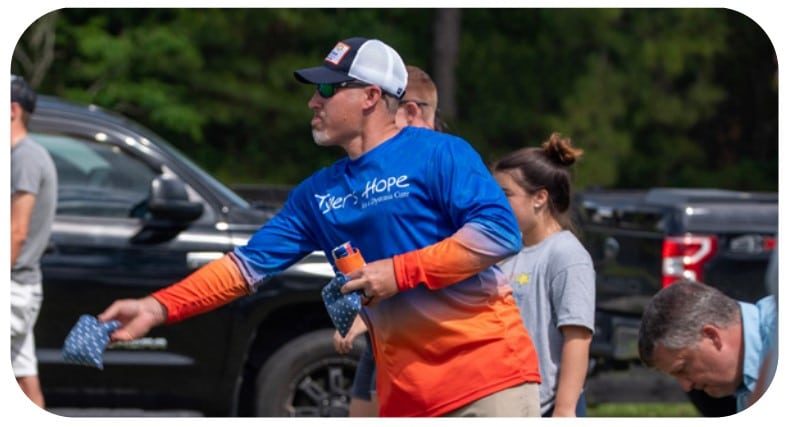
Many of the functions of Tyler’s Hope and The Hope Weekend could not be possible without the efforts of volunteers.
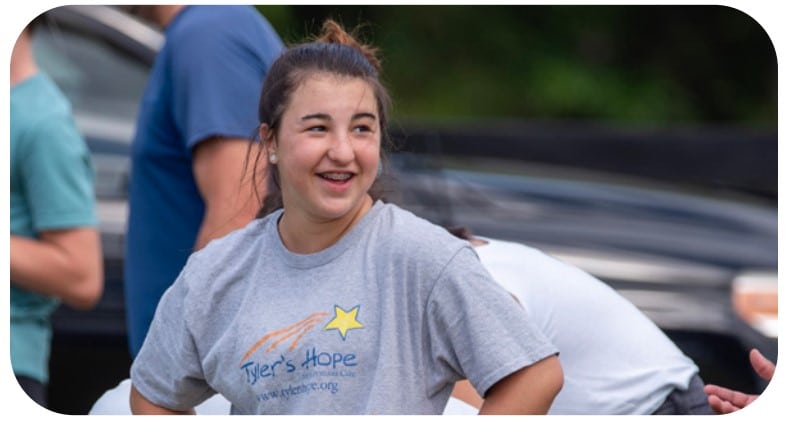
“Tyler’s Hope for a Dystonia Cure is led by a remarkable volunteer board, surrounded by individuals who generously dedicate their time and energy to our cause. Many of the InterMed teammates actively volunteer for various Tyler’s Hope events. Prior to each event, we reach out to local individuals to enlist their volunteer support. While some may initially have limited knowledge about our cause, they often become deeply connected once they understand our mission,” Staab says.
In March, the Tyler’s Hope Center of Excellence at Duke University joined the Dystonia Center of Excellence at the University of Florida.
A 7-year-old’s diagnosis in 2005 has led to a movement to find a cure for this vexing condition. The perseverance of the Staabs, volunteers and researchers will eventually pay off.
Donations can help support research and education for Tyler’s Hope for a Dystonia Cure.
For more information, visit www.tylershope.org.
Donations:
bit.ly/3Eguqrh
Volunteer registration:
www.tylershope.org/volunteer-registration.html
