
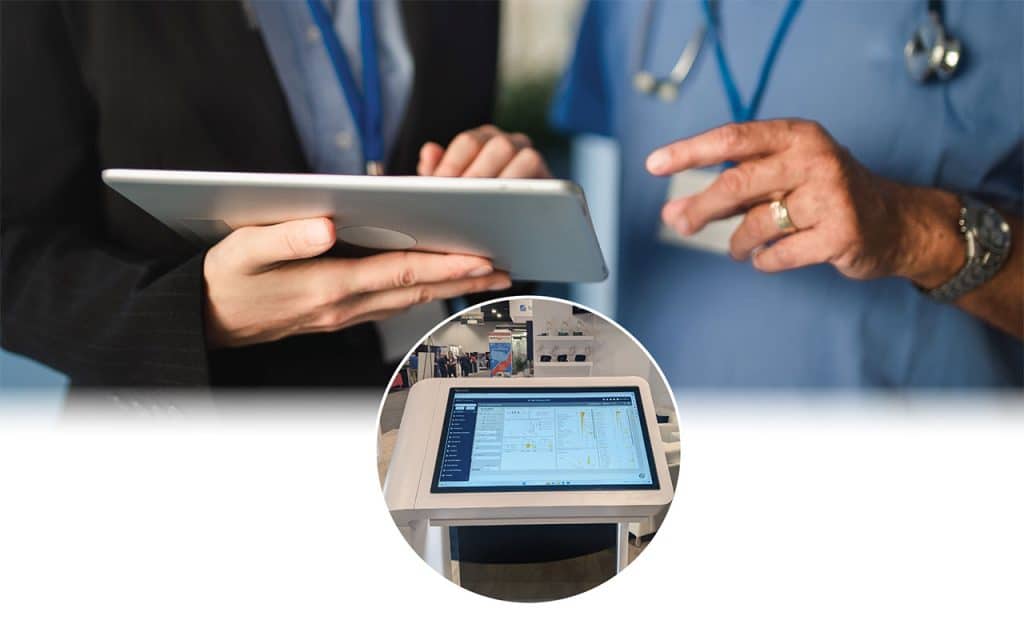
As healthcare systems continue to expand across multiple facilities and manage increasingly complex inventories, computerized maintenance management systems (CMMS) are becoming essential tools for operational efficiency, compliance and patient safety. In this TechNation roundtable article, industry leaders discuss how modern CMMS platforms are evolving to help HTM teams streamline workflows, improve asset visibility and make informed maintenance decisions. Their insights highlight the role of CMMS technology in supporting HTM departments in today’s fast-paced healthcare environments.
Participants in the roundtable article are:
• FSI Director of Product Design Joe Stockman;
• Phoenix Data Systems Vice President of HTM Consulting Alan Gresch;
• Renovo Solutions Vice President of Information Technology Gregory Scott ; and
• TruAsset Director of Business Development Amanda Moser.
 Q: HOW ARE CMMS PLATFORMS EVOLVING TO ADDRESS THE GROWING COMPLEXITY OF MANAGING CONNECTED MEDICAL DEVICES, LARGER ASSET INVENTORIES AND MULTI-SITE HEALTH SYSTEMS?
STOCKMAN: The biggest shift we’re seeing is a push toward simplicity in data collection. If a workflow has too many steps or takes too long, you end up with incomplete or inaccurate data – and that undermines everything downstream. Smarter integrations that detect changes and automatically update the CMMS are becoming essential, not just nice-to-have. At the end of the day, a solid, reliable asset inventory is the foundation for managing large, complex health systems while staying compliant and making sound operational decisions.
GRESCH: There is a distinction between multi-site and centralized. Phoenix does both. We see trends in the U.S. of greater consolidation of health systems and in the UK and Australia of country-wide and state-wide systems. We have the experience of delivering a centralized approach that will provide consistency of regulatory compliance, reporting, asset planning and benchmarking – both internally and across the industry. On the connected devices front, we are seeing more integrations to network monitoring tools that will deliver safer environments from a cybersecurity perspective but also provide a cheap asset location solution and asset utilization information.
SCOTT: The CMMS has transformed over the years from a basic documentation tool into a vital knowledge base that drives troubleshooting and strategic decision-making. In 2010, Renovo published a white paper highlighting the necessity of integrating network data into the CMMS to effectively manage interconnected devices and their inherent risks. This shift established a critical framework for supporting the complex systems we encounter today. Currently, we are observing a rising demand for expanded equipment attributes and new methods for managing asset movement across large-scale health systems.
MOSER: Modern CMMS platforms are evolving into the central knowledge hub for healthcare technology operations, bringing together asset records, maintenance history, regulatory documentation, location data, cybersecurity alerts and operational insights into a single source of truth that supports better decisions across the organization.
Q: ARTIFICIAL INTELLIGENCE AND AUTOMATION ARE RAPIDLY GAINING TRACTION IN HTM. HOW CAN CMMS LEVERAGE AI, PREDICTIVE ANALYTICS OR AUTOMATION TO IMPROVE MAINTENANCE EFFICIENCY, UPTIME OR DECISION-MAKING?
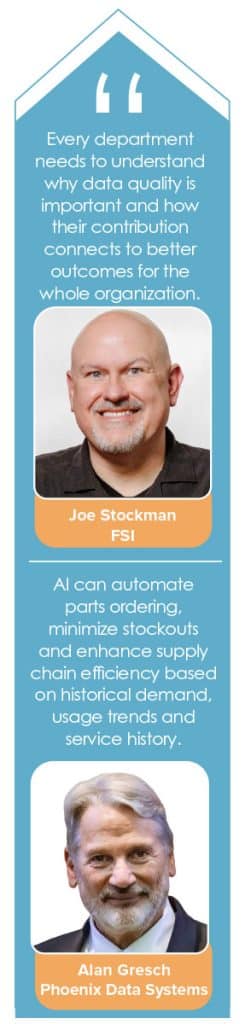
STOCKMAN: AI is only as good as the data behind it – that’s the honest starting point. When your data is current and complete, AI becomes a powerful tool for spotting trends, predicting failures and helping teams make smarter calls on repair versus replace or evaluating whether service contracts are actually delivering value. The cultural piece matters just as much as the technology, though. Every department needs to understand why data quality is important and how their contribution connects to better outcomes for the whole organization.
GRESCH: AI can automate parts ordering, minimize stockouts and enhance supply chain efficiency based on historical demand, usage trends and service history. On the capital planning and life cycle management front, AI can evaluate utilization and cost metrics to guide asset replacement and strategic planning, likely extending asset life in the process. From a workforce management perspective, AI can analyze workloads, automate ticket triage and support technician training. For regulatory compliance and risk management, AI tools will proactively monitor compliance gaps and alert you before violations occur. AI can also track vendor performance and support dynamic contract management. In clinical integration and decision support, AI integrates device data with clinical systems and supports care delivery decisions. AI can also detect abnormal device behavior and support real-time cybersecurity threat mitigation.
SCOTT: While predictive analytics has been a goal for many organizations for quite some time, its success remains contingent on good data and benefits from monitoring tools that many organizations have yet to implement. As these technologies mature, we expect the most impact of AI to be on the decision-making processes surrounding data quality, service scheduling, resource distribution and capital replacement strategies. As costs continue to rise, organizations must look hard at what equipment must be replaced, the ROI on the investment in revenue and patient care capabilities. Historically that has required a significant amount of manual data aggregating or complex reporting algorithms that newer AI-driven analytic tools are improving at daily.
MOSER: While many health systems remain cautious about fully integrated AI due to security considerations, there are still practical ways CMMS data can support AI-driven analysis. Search and report data can be used to identify trends, suggest disposition decisions, highlight recurring failures by device type and support broader operational insights. AI can also assist with tasks such as drafting procedures, identifying duplicate records and improving data quality where appropriate controls are in place.
 Q: CYBERSECURITY AND REGULATORY COMPLIANCE REMAIN TOP PRIORITIES FOR HEALTHCARE ORGANIZATIONS. HOW DOES A CMMS HELP HTM DEPARTMENTS MANAGE RISK, MAINTAIN COMPLIANCE AND STAY PREPARED FOR INSPECTIONS OR AUDITS?
STOCKMAN: A strong CMMS takes a lot of the manual burden out of compliance by automating alerts, tracking deadlines and keeping documentation organized and accessible. The goal is to always be inspection-ready – not scrambling when a surveyor walks through the door. A robust compliance module makes document review straightforward and gives leadership confidence that nothing is slipping through the cracks.
GRESCH: In addition to the cybersecurity integrations previously mentioned, Phoenix continuously monitors evolving healthcare regulations and accreditation standards through active participation in compliance-focused industry forums, events and customer collaboration initiatives. AIMS 3 provides HTM teams with robust tools to track compliance metrics, standardize documentation, manage preventive maintenance and inspection readiness activities, and streamline audit preparation. The platform also supports organizations during accreditation surveys and regulatory inspections by helping ensure that required records, service histories and compliance data are readily accessible and reportable. Phoenix further strengthens its compliance leadership through ongoing education initiatives. Our vice president of HTM consulting leads multiple annual sessions for AAMI’s Expert Insights program, including the highly regarded presentation, “Mastering HTM Accreditation Compliance: Stress Less, Achieve More,” which shares proven strategies for leveraging CMMS technology to simplify and improve compliance outcomes. Additionally, Phoenix recently developed an integration with The Joint Commission AMP rounding software that automatically converts identified deficiencies into AIMS work orders, creating a closed-loop corrective action process that improves accountability, accelerates remediation and enhances audit readiness.
SCOTT: Risk management begins with a robust asset inventory. Whether addressing emerging vulnerabilities or new regulatory requirements, the ability to access data for informed decision-making is essential. Cybersecurity incidents and audits often underscore the necessity of maintaining detailed equipment records, including the interconnections between various systems that may fall outside traditional HTM oversight. The primary difficulty lies in keeping this equipment data current and accessible for when it is most needed and HTM staff are uniquely positioned through routine maintenance to review the data. Utilizing a comprehensive CMMS provides critical information to stakeholders at the exact moment of need, which is an invaluable asset to any organization.
MOSER: A CMMS helps HTM departments manage risk by serving as the central system of record for documentation, corrective actions, recalls and security alerts. When integrated with cybersecurity platforms, relevant alerts and recall information can flow into the CMMS so teams can review, assign, resolve and document each item properly. Strong documentation, defined procedures and reliable reporting help HTM teams demonstrate patient-safety protocols and provide the records needed for regulatory inspections or audits.
Q: WITH ONGOING STAFFING SHORTAGES AND FINANCIAL PRESSURES, HOW DOES A CMMS HELP HTM TEAMS IMPROVE PRODUCTIVITY, CONTROL COSTS AND DEMONSTRATE VALUE TO HOSPITAL LEADERSHIP?
STOCKMAN: The software should work for your team, not the other way around. HTM professionals are there to inspect, test and maintain equipment – not to fight with a system that slows them down. A well-configured CMMS reduces documentation time while preserving data quality, which is a real win when you’re short-staffed. More importantly, it gives leadership timely, data-driven insights that replace gut instinct with measurable analysis – helping organizations move from tribal knowledge to informed, confident decision-making.
GRESCH: Understanding the tremendous need for greater efficiency, we design our integrations and automations with a keen eye on developing closed-loop workflows, eliminating unnecessary manual work and automating any outcomes that generate follow-up tasks. This focus creates hundreds of hours in time savings and subsequent dollar savings annually. Also, by offering comparative analytics through superior analytics and HTM consulting services, we can help our customers deliver the highest quality of services at the lowest possible cost, optimizing their partnership with clinical and executive leadership within their organization.
SCOTT: While I previously mentioned the importance of capital planning, replacement is often a long-term goal that may not be immediately achievable. Having a CMMS that shows the real volume of work that is performed by HTM teams can show where there may be resource imbalances and highlight the risks of running difficult to support equipment. The data in a CMMS can also identify the cost of excessive maintenance on reliable devices where programs like alternative equipment maintenance (AEM) can help shift resources where they are needed.
MOSER: One of the most effective ways a CMMS can improve productivity is by streamlining everyday tasks, since those activities often consume the most time. If technicians must spend excessive time clicking, searching or entering repetitive data, that reduces the time available for maintaining equipment. A well-designed CMMS helps teams complete work orders quickly and accurately, while strong vendor support and frequent updates reduce downtime, improve workflows and help organizations continue gaining value from the system
 Q: LOOKING AHEAD, WHAT KEY INNOVATIONS OR INDUSTRY TRENDS WILL MOST SIGNIFICANTLY SHAPE THE ROLE OF CMMS IN HTM OVER THE NEXT 3–5 YEARS?
STOCKMAN: AI will be the biggest driver over the next several years, enabling departments to benchmark performance, optimize spending and make proactive decisions grounded in real data rather than historical assumptions. We’ll also see CMMS platforms evolve to better serve a younger, more tech-native workforce – with more intuitive interfaces and stronger visualization tools. Standardization of device data will be a game changer for streamlining analysis across organizations, and deeper integration between systems will continue to close communication gaps and unlock new operational value.
GRESCH: Phoenix believes AI, interoperability and automation will fundamentally reshape the CMMS landscape in HTM over the next 3-5 years. The next generation of CMMS platforms will move beyond traditional work order management to become intelligent operational ecosystems that help healthcare organizations improve uptime, reduce costs, strengthen compliance and support patient care in real time. Key innovations will include:
• AI-driven predictive maintenance and advanced analytics leveraging historical service data to anticipate failures before they occur
• Real-time equipment location, availability and utilization tracking to improve asset visibility and operational efficiency
• Deeper integration between medical devices, CMMS platforms and clinical systems to better support care delivery and data-driven decision making
• Automated parts procurement and inventory optimization to reduce stockouts, minimize downtime and streamline supply chain management
• AI-assisted troubleshooting, repair recommendations and remote expert collaboration fully integrated into technician workflows
• Expanded cybersecurity monitoring and compliance automation to help HTM teams proactively manage regulatory and operational risk
Phoenix sees the future CMMS not simply as a maintenance platform, but as a connected intelligence hub that enables healthcare organizations to operate more efficiently, make faster decisions and deliver better patient outcomes.
SCOTT: AI will continue to shape how we do things and the CMMS is no exception. In the near future, I anticipate that integrating CMMS with various data sources, tools and external systems will become a top priority as we develop the knowledge bases necessary for AI-driven workflows. This evolution in data management will shift CMMS platforms from specialized HTM utilities into much more comprehensive assets for healthcare technology.
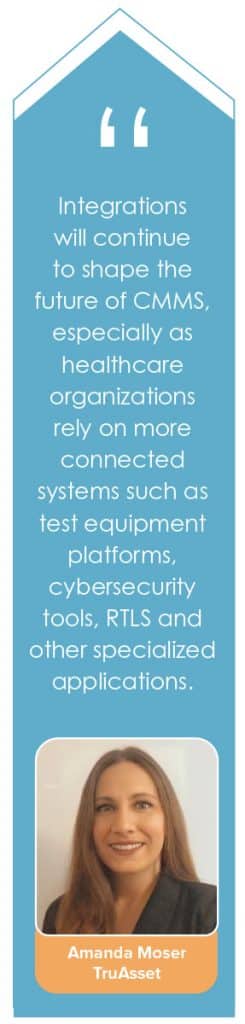
MOSER: Integrations will continue to shape the future of CMMS, especially as healthcare organizations rely on more connected systems such as test equipment platforms, cybersecurity tools, RTLS and other specialized applications. Bringing that information into one centralized location will help HTM teams improve visibility, optimize workflows and make better operational decisions. AI-supported analytics and expanded automation will also become increasingly important as the technology matures and organizations determine where it can be used safely and effectively.
Q: IS THERE ANYTHING ELSE REGARDING CMMS THAT YOU WANT TO SHARE WITH THE TECHNATION COMMUNITY?
STOCKMAN: It all starts with a complete, standardized asset inventory – accurate manufacturer, model, and serial information, along with consistent naming conventions across the board. As healthcare organizations continue to merge and consolidate, staying current on maintenance procedures, recalls and end-of-service timelines becomes even more critical. HTM teams that invest in that foundation will be far better positioned to keep pace with the demands of an increasingly complex environment.
GRESCH: Any CMMS, and the value it can ultimately bring, is only as good as the data being entered into it. As such, you need to ensure your device data relative to manufacturer, model and device category is clean and consistent and all technician time, both device hours and non-device hours, is documented using a standardized and clearly defined set of work order codes. Your CMMS partner should be able to help you with establishing this initially, but I always recommend having a data integrity policy and a governance group in place to keep your data clean going forward.
MOSER: CMMS vendors should remain engaged after the contract is signed, helping the organization not only use the software but also refine workflows and improve outcomes over time. That ongoing partnership is what helps ensure the system continues to support the organization’s operational goals.