Sponsored by Innovatus Imaging

By Matt Tomory
The importance of being ISO 13485:2016 certified has become a much more frequent topic of discussion as a result of the Right to Repair movement. Organizations that commit to the rigorous and costly process are signaling their commitment to operate at the highest possible quality level.
In the clinical environment within medical imaging, there is a standard similar to that of ISO. Radiology, cardiology and other departments which utilize imaging within a hospital or clinic have the option of becoming accredited for radiology practices and quality assurance systems by the American College of Radiology (ACR), the American Institute of Ultrasound in Medicine (AIUM), and the Intersocietal Accreditation Commission (IAC).
Accreditation requires demonstrating adherence to established standards for image quality testing, equipment maintenance, quality systems, and that your medical personnel meet standards for interpretation of diagnostic examinations. It also shows the department has audited its strengths and weaknesses and has taken any needed corrective actions to streamline efficiencies and operations to better serve patients. You may be unaware, but a portion of the responsibility for complying with these standards is dependent on HTM professionals.
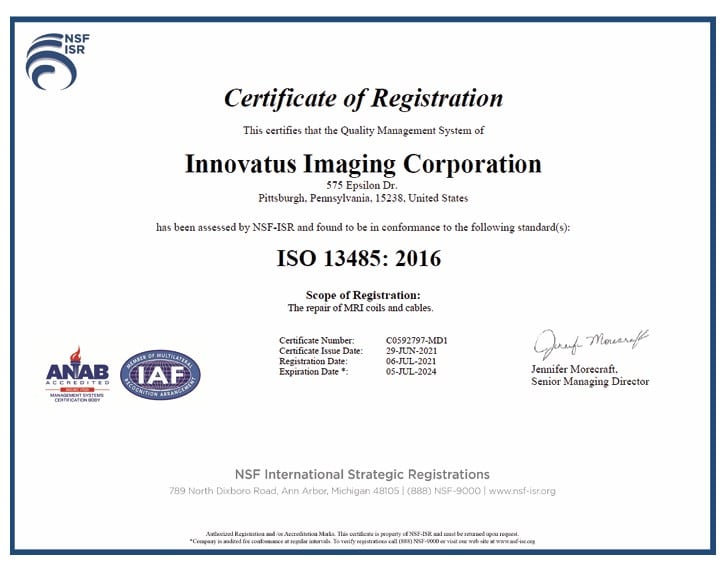
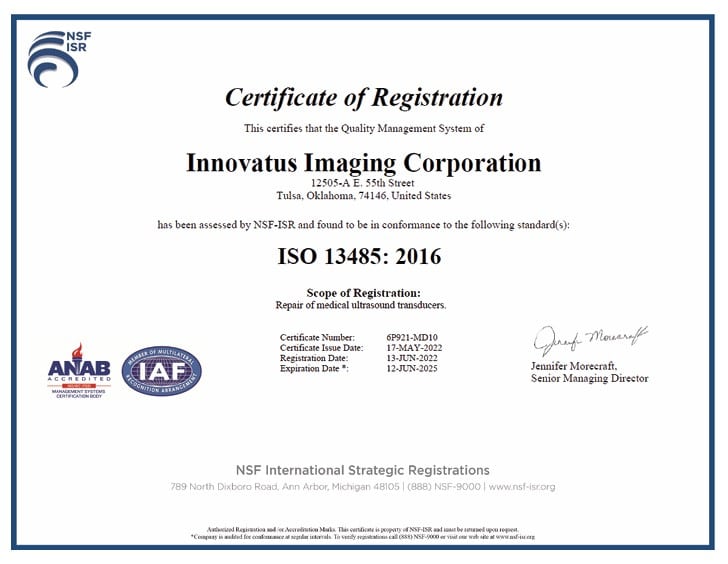 Does ISO 13485: 2016 and accreditation really matter?
More than you think. Patients are highly informed consumers and review performance studies on hospitals and caregivers provided by reporting organizations such as Health Grades and other sites, These reviews allow consumers to compare hospitals on many factors such as patient experience, timely and effective care, overall value, AND the use of medical imaging. Hospitals that don’t follow best practices for imaging services are often flagged as conducting unnecessary services or missing vital diagnoses. Protecting reputations is just one of the important outcomes of accreditation for radiology departments, in addition to achieving greater efficiencies, operations, and potentially higher reimbursements.
HTM professionals play a vital role in helping to achieve and maintain accreditation, covering quality assurance and accountability for several processes and outcomes, including:
- Providing full-service histories, which document not only PMs and repairs, but also other activities associated with a device.
- Performing frequent image quality assessments in much greater detail than the OEM.
- Assessing and documenting performance on connected devices such as ultrasound probes, MRI coils and hard copy devices.
- Acquiring and assembling quality control data for the department applying for accreditation.
Even if your imaging departments are not currently accredited, aligning your teams’ activities with accreditation requirements can help avoid costly mistakes, downtime, and other issues that can impact clinicians, diagnostic efficiencies, and patient satisfaction, all of which can impact your hospitals’ quality ratings and potential insurance reimbursements.
An additional step you can take to protect your team and patients is to always work with repair providers that have proven their commitment to quality by becoming and maintaining ISO 13485:2016 certification. Companies maintaining this level of certification provide many added values that non-certified providers may not. The most important factor is confidence.
- Confidence that your medical device repairs are being performed according to well-defined and repeatable processes, that their partners and suppliers are routinely reviewed and qualified, that a system of continuous quality improvement based upon risk analysis is in-place, and that the organization is open to external bodies assessing their entire operations.
- Assurance that all aspects of the device are addressed during repair to ensure longevity and safe and effective performance.
- Knowledge that shortcuts are not being taken during the repair process, which, although may be cheaper and allow the device to function, could lead to premature or latent failures or more importantly compromised safety or performance.
Innovatus Imaging has developed webinar-based content that introduces HTM teams to the elements and requirements of accreditation by the industry’s leading accrediting boards. We present the proper techniques of assessing image testing using a tissue mimicking phantom and how to perform the tests required by the ACR, AIUM and IAC. The module provides the soft skills to complement the hard technical skills possessed by ultrasound service personnel. If you are interested in the session or would like more information about certification from ACR, AIUM, IAC, and ISO 13485:2016, email us at training@innovatusimaging.com.